
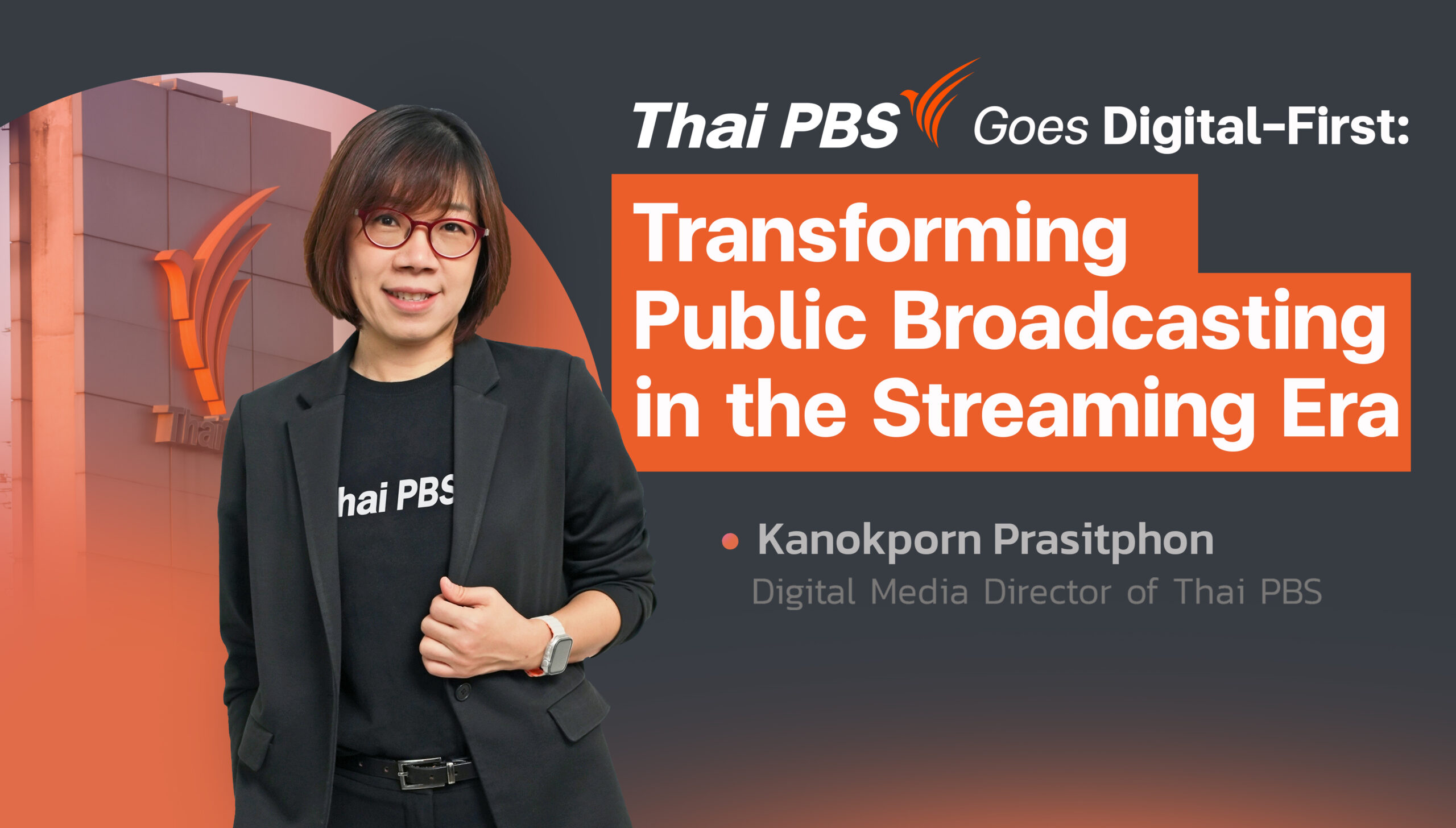

Thai PBS Goes Digital-First: Transforming Public Broadcasting in the Streaming Era
“For Thai PBS, the digital shift is a major opportunity to improve how we deliver content and to reach audiences in ways that align with modern media habits. We have already begun making those changes,” says Kanokporn Prasitphon, Digital Media Director of Thai PBS.

In an exclusive interview with ABU News, Kanokporn outlined how Thai PBS has pursued a sustained digital transformation over the past six years, laying the groundwork for a genuinely digital-first public broadcasting environment.
According to her, the transformation has been driven by several key initiatives: organisational restructuring, the adoption of a digital-first agenda, systematic staff skills development, the integration of digital KPIs, clearer budget allocation, and the launch of new digital products and services.
Among these new offerings, Thai PBS is actively developing online-first programmes, The Visual Thai PBS, a verification, and fact-checking service, as well as major AI-driven projects.

“I see this as a signal to audiences that Thai PBS is changing—improving and expanding our digital products and services,” she said.
Kanokporn explained that in the past, fact-checking within public broadcasting largely took place internally, particularly within the News Department and newsroom teams. However, the rapid growth of scams, disinformation and fake news has prompted Thai PBS to move beyond internal verification and begin offering fact-checking as a public service.
As a result, Thai PBS launched Thai PBS Verify in November 2024.

Any major transformation, she noted, inevitably comes with challenges—many of which are shared by broadcasters worldwide. Internally, organisational culture remains a key obstacle. Much of the Thai PBS workforce comes from earlier generations of television professionals, making the shift from single-platform broadcasting to multi-platform content creation a significant adjustment.
Externally, changing audience behaviour presents another major challenge.
“Thai audiences generally gravitate towards lifestyle, entertainment or visually colourful content,” Kanokporn said. “That makes it harder for public broadcasters to achieve mainstream popularity, because our mission prioritises social value rather than pure entertainment.”
When asked about competition with global OTT platforms such as Netflix, Disney+ and Hulu, Kanokporn emphasised that Thai PBS differentiates itself through its public-interest mandate.
“Our mission is not commercial success,” she said. “It is to serve the public interest—by prioritising high-quality, trustworthy and safe content, especially for children and young people, and by fostering socially meaningful creativity.”
She also highlighted the launch of Thai PBS’s own OTT platform, “VIPA”, which stands for “Vision and Passion”. The platform focuses on documentary and drama content and is being positioned as a prototype for Thailand’s future national OTT platform.

“Students, independent filmmakers and emerging creators, everyone can join us,” Kanokporn said. “Thai PBS provides a platform where high-quality work can be showcased and supported, with opportunities to reach international audiences as well.”