
Is public service media still important? Just ask ChatGPT
At a time when global trust in media is plummeting and Generative AI is responsible for a surge in disinformation, even ChatGPT knows the importance of public service media.
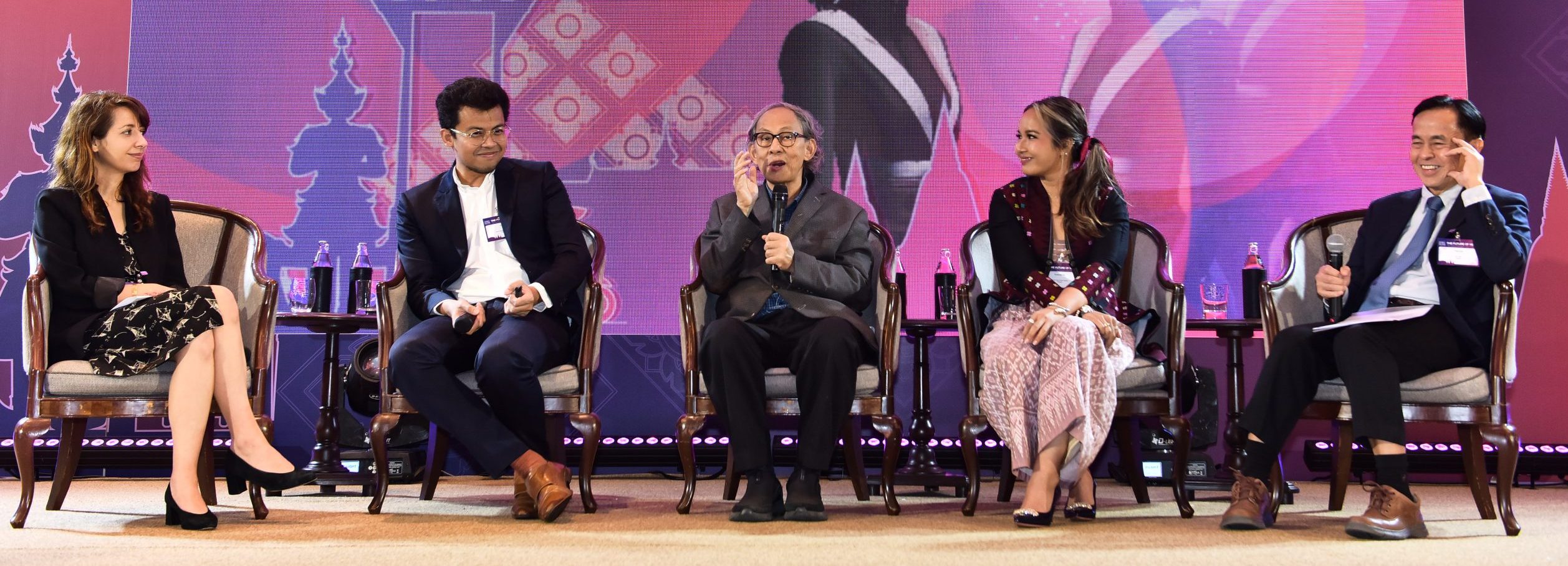
During the Global News Forum discussion on “Truth, Trust, and Democracy,” media experts addressed the alarming fall in trust in the media and the impact on democratic institutions.
“The bad news is, the trust in the media in countries across the world, has been on a consistent decline, and in the process, the faith in democracy also declines,” said Thepchai Yong, Executive Advisor at Thai PBS Thailand.
Thepchai, who moderated the panel, highlighted the crucial role of the media as the “fourth estate” in promoting and nurturing democracy. “Fewer and fewer people trust the media to report the truth, and people have come to believe that the media have become more biased and more partisan,” he added.
Nesryn Bouziane, Lead International Broadcast & Digital Services Strategy at ABC Australia emphasized the importance of public service media in maintaining trust. She noted that the ABC has consistently high levels of trust from the Australian public, thanks to its long-standing legacy, legal mandate for independence, and initiatives to ensure transparency and accountability.
“We have very specific values as a public media that we apply.” Nesryn said. “We serve public interest, we are accountable, we represent diversity of our population, and we also adapt to new technologies,” she explained.
Nesryn highlighted the ABC’s efforts to combat misinformation, including the recent launch of a dedicated fact-checking unit within its newsrooms. She also stressed the importance of decentralizing operations and engaging with local communities to better serve the diverse needs of the Australian public.
Thepchai noted many traditional media outlets were struggling financially and unable to invest in resources for in-depth reporting.
“Last week, I asked ChatGPT why the public media is still needed in this age of AI. And the answer is that, a public media is still necessary, because at the end of the day, ChatGPT needs trustworthy news to copy from,” he shared.
He asked the panel how media organizations can effectively fight back against the influence of social media and the proliferation of misinformation.
Dr Surachanee Hammerli Sriyai, visiting fellow at ISEAS-Yusof Ishak Institute Singapore, emphasized the need for a collective effort to restore trust in democracy. She called for media organizations to double down on rigorous journalistic standards, fact-checking, and transparency, while also urging citizens to be more selective consumers of news and information.
“Ultimately, restoring trust in democracy requires collective effort,” Dr Surachanee said. “It demands a renewed commitment to truth and integrity from both the media and the public. It requires us to hold ourselves accountable for the information that we consume and share,” she explained.